

SOLUTIONS OFFERED
As an integrated, full-turnkey ICT Solutions Provider, OnPoint Hub operates within the broader ICT space. This extends to the ideation (strategic planning), implementation (various ICT Modes, Products & Services), ICT Support Services – as well as Consulting Services.
As a multilayered company, OnPoint Hub also offers ICT Facilities (remote), and conducts all ICT Security functions, Cloud Services as well as Networking Solutions.
As a preferred business partner, OnPoint Hub enables organisations to focus on their core mandate – while we diligently manage the strategic ICT port and thereby, positively contributing to any organisation’s bottom line. Innovatively, OnPoint Hub provides top-tier, strategic technologies and business solutions that enable businesses/organisations reach their full potential. This, we do through identifying, implementing and supporting the most appropriate and best-suited technological interventions needed to achieve all pre-set organizational ambitions.

ICT Security
Cyber Threat Assessment:
Systematically, OnPoint Hub employs a detailed process that serves to proactively identify, analyse, and assess potential threats to an organization’s digital assets and properties.
This proactive approach to cybersecurity acts as a fortified roadmap for strengthening defence from potential threats and should be considered – by all organisations with a digital footprint.
Benefits:
- Identifies vulnerabilities in systems and networks.
- Evaluates the motives and capabilities of potential attackers.
- Informs data-driven decisions to improve cybersecurity posture.
Key Stages
OnPoint Hub Cyber Security Approach
Identify threats: Recognize potential threats (malware, phishing attacks, or unauthorized access/hacking attempts). Analyse threats: Assess the likelihood and potential impact of each would-be threat. Evaluate vulnerabilities: Identify weaknesses in systems and networks that could be exploited by threats. Develop mitigation strategies: Create plans to address vulnerabilities and reduce risks.

Next Generation Firewall
Recommended to be used by any organization with a significant online presence and or/ sensitive data, our Next Generation Firewall is suited for organisations concerned about application-based attacks and malware – and those needing granular control over network traffic.
In essence, the Next Generation Firewall is an advanced firewall that goes beyond traditional port and protocol filtering and thereby, provides deeper security. This is achieved by inspecting the content of network traffic as well as identifying and controlling applications running on the network.
Benefits:
- Improved security against complex attacks.
- Provides more granular control over network traffic.
- Increased visibility into network application usage/data traffic.
- Enables faster (real-time) detection and response to potential threats.
At OnPoint Hub, we offer the full range of Unified Threat Management solutions.

Mobile Device Management (MDM)
As per industry norm and best practice, at OnPoint Hub, we view Mobile Device Management (MDM), as an effective tool and process to manage smartphones, tablets, and other mobile devices within an organization. Our MDM solution places a key focus on ensuring enhanced security, compliance, and efficient usage of said mobile devices for enterprise/business purposes.
Benefits:
- Enhanced Security: Our solutions enforce password policies and data encryption, enables remote wiping/clearing of lost or stolen devices and distinguishes between personal and work data (containerization).
- Improved Compliance: Ensures devices meet requisite security and regulatory mandates (distributes and enforces company policies to mobile devices).
- Increased Productivity: Simplifies App deployment and updates for corporate/work Apps and enables remote configuration and troubleshooting of devices. Benefits extend to providing secure access to company resources for mobile employees.
MDM Key Features:
- Device Enrolment
- Inventory Management
- Application Management
- Security Policy Enforcement
- Remote Wipe (stolen devices)
- All Mobile Content Management
OnPoint Hub offers a comprehensive MDM suite to manage any mobile device protocol – within various sized organisations in all industries.

Authentication Solutions
For added and robust security, at OnPoint Hub, we offer a host of Authentication Solutions aimed at allowing access to your organisation’s network from mobile devices used by remote/field teams. These extend to:
Moderately Secured Solutions such as: Passwords, PINs, Security Questions – to the likes of: Security Tokens, Hardware Keys, Smartphones for mobile verification and the like. We also offer the most secured modes such as: Biometrics/Fingerprint Scanners, Facial Recognition, Iris Scans.
Benefits of Strong Authentication:
- Reduces the risk of unauthorized access and data breaches.
- Protects against cyber/phishing attacks and stolen credentials and data.
- Enhances organisation’s overall cybersecurity posture.
Email Content Filtering
An efficient platform for filtering email is an essential requirement for all businesses to prevent malicious email attacks and minimise Spam.

Web Content Filtering
Web Content Filtering solutions from OnPoint Hub provides our clients with complete control over employee access to the internet. In turn, this increases focus and promotes productivity.
SASE Solution
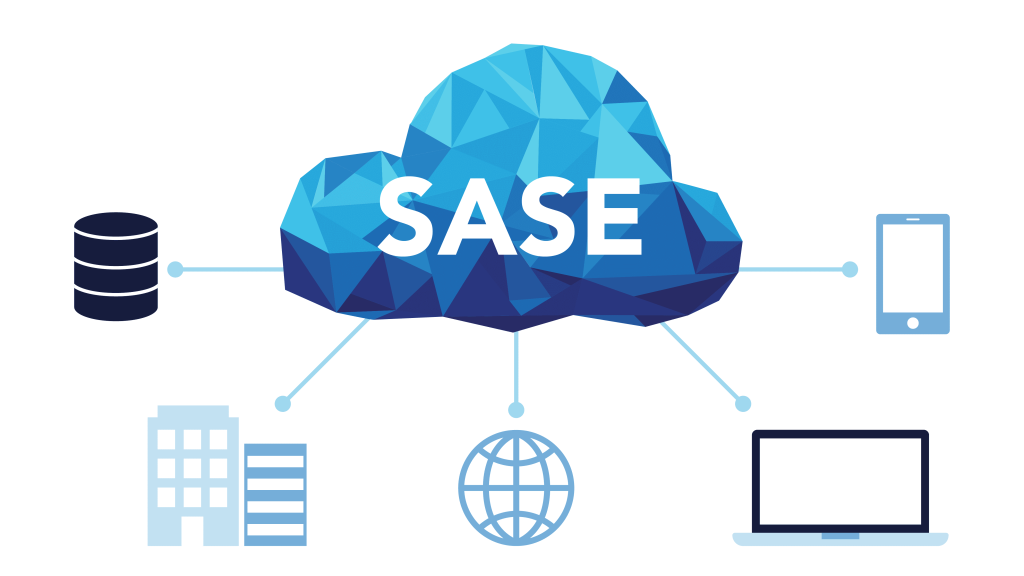
At OnPoint Hub, we believe that any organisation with an online presence needs SASE (Secure Access Service Edge). Offered within our extensive suite of solutions, Sase is a cloud-based security model that streamlines and converges networking and security functionalities into a single/one solution that increases network performance and productivity. This solution also simplifies management and operations, and improves security posture with consistent policies at scale. In short, SASE follows remote users anywhere with secure access.

ZTNA (Zero Trust Network Access)
ZTNA is a security model that enforces “least privilege access” for users and devices trying to access applications. Our ZTNA Solution eliminates the concept of a trusted network perimeter and grants access only to authorized users and devices on an organisation’s network based on real-time context.
Benefits of ZTNA:
- Improved Security: Reduces the attack surface by minimizing unnecessary access to internal resources.
- Enhanced User Experience: Enables secure and seamless access to applications from anywhere.
- Simplified Management: Eliminates the need to manage complex network access controls.
- Increased Scalability: Supports a growing remote workforce and cloud adoption.
In essence, ZTNA Is a security solution that verifies users and grants access to specific applications based on identity and context policies

Networking
Local Area Networks (LAN):
In today’s rapidly changing business environment, your office network is not just about connectivity. LAN enables devices to share resources (files, printers, internet connection) and communicate with each other – in this way, improving productivity and efficiencies.
Wireless Solutions:
At OnPoint Hub, we offer a wide range of wireless solutions – based on clients’ security needs, scalability requirements and manageability options.
Wide Area Networks (WAN):
OnPoint Hub have provides comprehensive tools and insightful expertise in delivering the most effective and enterprise-apt WAN solutions to organisations of all sizes – across industries and sectors.
Unified Communications:
OnPoint Hub boasts extensive experience in delivering Unified Communications and mobility products for small and medium sized businesses.
WebEx:
Conduct regular meetings among geographically dispersed staff members.
SIP Trunking:
SIP allows you to run communications applications over your internet connection or IP network, such as Voice over IP (VoIP)

Data Management
Data Backup
Availability Suite combines industry leading backup, restore and replication capabilities of Backup & Replication with the advanced monitoring, reporting and capacity planning functionality of Backup
Business Continuity and Disaster Recovery
What might the effects be of a major utilities failure such as loss of power? What if a neighbouring business’ building suffered a major fire that resulted in you having no access to your offices for an indefinite period?
Unified Communications – This bridges the gap between voice environments and computing to deliver real time messaging, voice and conferencing to the desktop.
Data Management – This involves the planning, development, implementation, and administration of systems for the acquisition, storage, and retrieval of data.
ICT Security – A guided approach to ensure integrity and confidentiality of data, which is crucial to every enterprise today.
Enterprise Applications – Used to connect together different software solutions and their underlying databases.
Enterprise Computing – The supply and implementation of large scale computing systems, servers and power management.
Cloud Services – The way the companies buy and use ICT is changing. There is a shift away from owning hardware and having applications based on site to buying software as a service.

Data Centre
Data-intensive applications such as Big Data, cloud computing, video streaming services and mobile broadband internet connectivity continue to grow at an accelerating rate. The ever-expanding data volumes pose many technical challenges on data centres. Multiple terabits of data travel to and from the data centre each second. Moving such massive data around the data centre requires a robust infrastructure that is capable of handling high bandwidth data delivery to and from storage endpoints, servers, top-of-rack (TOR) switches and core switches.
Endpoint Security
People now work from anywhere, not just from their corporate headquarters. And BYOD has added billions of devices into the enterprise ecosystem. Today, Endpoint protection needs to take into account devices, apps, and networks
Cloud
Application and infrastructure resources that exist on the Internet. Third-party providers contract with subscribers for these services, allowing customers to leverage powerful computing resources without having to purchase or maintain hardware and software.